Article of our Co-Founder Ariane in IM+io
Article・4 min
Article for IM+io of the August-Wilhelm Scheer Institut of our Co-Founder Ariane Scheer-Danielsson towards the need for a Trust Layer in Physical AI.
This whitepaper introduces a comprehensive security architecture that establishes a vendor-agnostic software Trust Layer directly at the point of origin. By generating cryptographic Trust Labels (compressed products) at the sensor level, chaining time-series data chronologically, and cross-authenticating across a decentralized node network, TrustNXT ensures that every captured data stream carries an immutable, verifiable proof of origin. We present the Trust Layer architecture, its decentralized resilience model, and an edge-native implementation strategy in C++ on Raspberry Pi 5 / NXP i.MX 95 / Nvidia Jetson Orin Nano / WSL2 clusters featured alongside a real-time synchronized multi-video forensic verification suite.
The digital information ecosystem is at a critical inflection point. The democratization of digital manipulation tools and the inherent vulnerabilities in conventional data storage have created an environment where the authenticity of visual and sensor content can no longer be taken for granted.
Before the storage of sensor data on digital media became standard, sensor data were stored in analog form (e.g., exposed film), where subsequent modification left physical traces. Today, digital storage media can be deleted, rewritten, or retouched without leaving any recognizable physical traces indicating a manipulation. The ability to generate convincing but entirely fabricated visual evidence poses a direct threat to industries reliant on conclusive proof, such as law enforcement, insurance, and journalism.
Compounding the threat of generative media is a critical vulnerability at the point of capture. If a recording is completely or partially missing, it cannot be conclusively proven that it ever existed. For example, malicious actors may attempt to remove specific images from a time series of a surveillance camera where a perpetrator can be recognized. Solutions that only secure data after it has been written to centralized storage fail to protect against interceptions, selective deletions, or hardware-level injection attacks occurring immediately post-sensor.
In response to the data manipulation problem, several countermeasures have been proposed. However, a systematic analysis reveals that each suffers from limitations rendering them insufficient for mission-critical evidentiary use.
Methods relying on statistical pattern recognition or digital watermarks are inherently post-hoc techniques. They do not prevent the initial manipulation of the data sets. Furthermore, these approaches can often be bypassed by sophisticated adversaries or degraded by standard transformations like compression.
While standards like C2PA provide excellent frameworks for provenance metadata, their standard software implementations lack a hardware-rooted connection to the physical sensor. Furthermore, relying on a central instance or a single backend server creates a single point of failure. If an attacker gains physical or cyber access to the camera or the central server, the entire chain of trust is compromised.
To address these fundamental vulnerabilities, the TrustNXT framework establishes a decentralized, hardware-rooted chain of trust directly at the edge. The architecture is defined by an authentication module comprising a data interface, an authentication interface, and dedicated authentication logic.
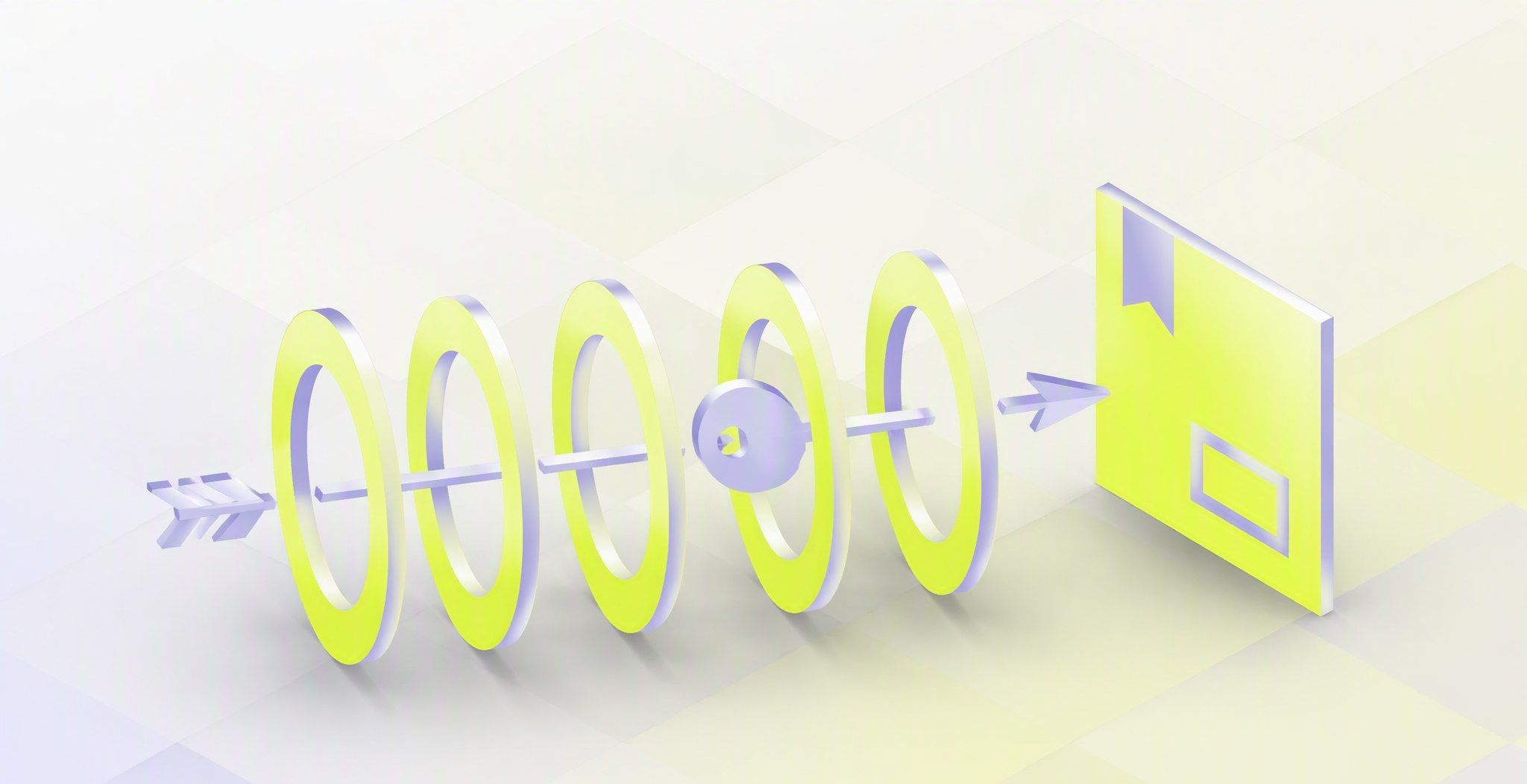
At the core of the TrustNXT module is the ability to receive data sets via the data interface and immediately form one or more "compressed products". In the TrustNXT framework, this compressed product is formalized into a deterministic Trust Label. A Trust Label is a condensed, immutable summary of the data set (e.g., a cryptographic hash) that changes if a modification is made at an arbitrary point in the payload.
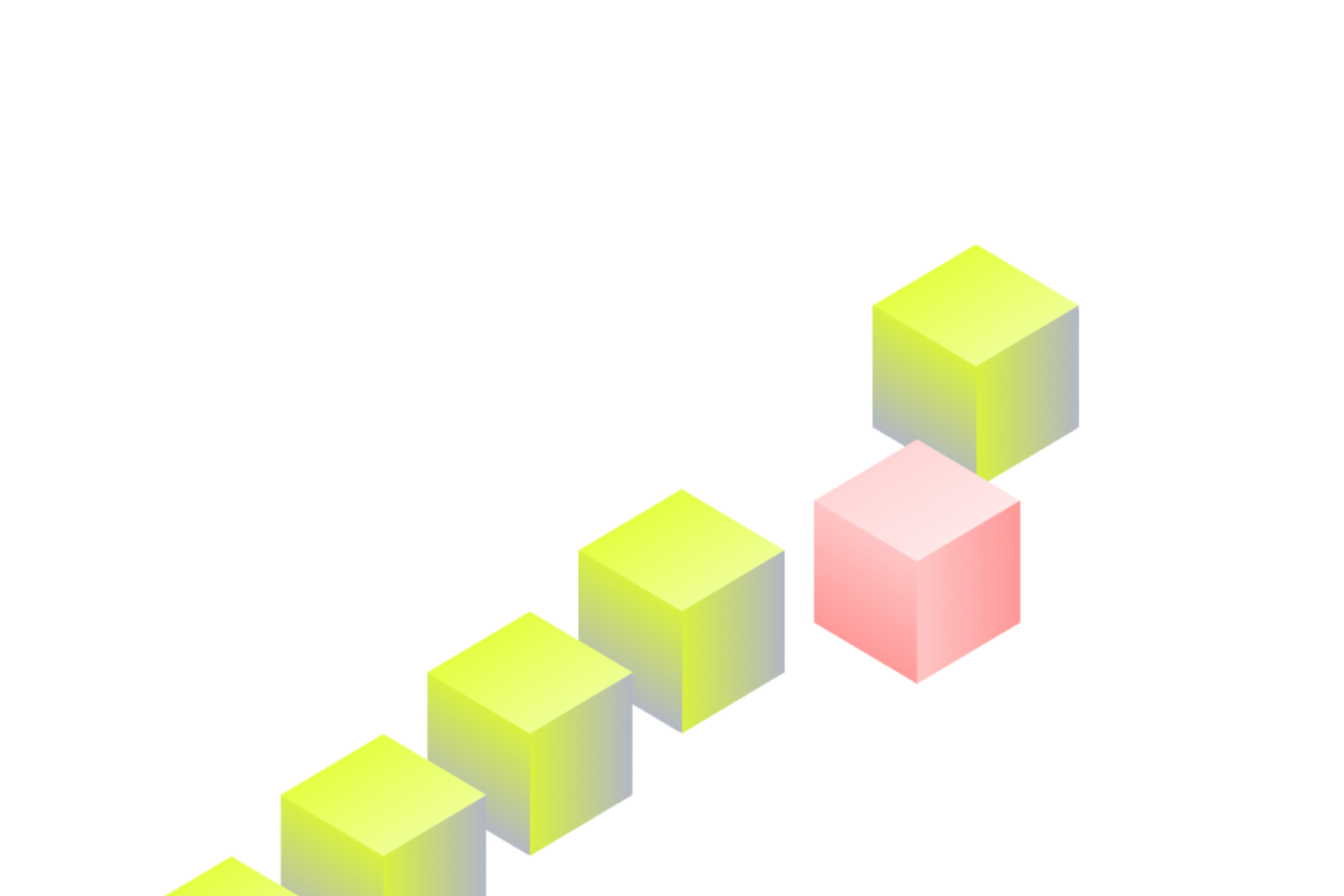
TrustNXT goes beyond securing individual frames by enforcing temporal continuity. The authentication logic is designed to include a reference to at least one earlier data set in the time series, or a compressed product of this earlier data set Hf-1, directly within the current authentication payload. This recursively binds every frame f to frame f-1, establishing an unalterable chronological chain. If an attacker attempts to subsequently manipulate a sequence (e.g., to erase specific frames from surveillance footage or insert synthetic frames), the cryptographic mismatch will instantly break the state evaluation, exposing the point of insertion or deletion.
The most significant distinction of the TrustNXT architecture is its decentralized distribution of trust, eliminating the reliance on a central server.
The TrustNXT authentication logic is uniquely configured to receive and store authentications from external authentication modules. In a typical deployment, nodes are organized in a closed-loop P2P=2 bidirectional ring mesh, where each node maintains active, low-latency UDP/SRT links to its direct physical neighbors. An authentication module not only signs its own sensor data but also receives and stores the 32-byte hashes created by neighboring sensors. These external authentications HLeft and HRight are continuously woven into the module's own newly created Trust Labels.
This Peer-to-Peer (P2P) cross-signing creates a highly resilient mesh. If an attacker physically accesses and destroys a specific camera to eliminate evidence, the authentications for that camera's data are already secured in the memory of neighboring cameras.
To successfully falsify or suppress a data set unnoticed, an adversary would have to simultaneously compromise the hardware and secret keys of all cross-authenticating cameras in the network, making undetected manipulation practically impossible.
For example, if an attacker tampers with a single image payload on Node A at frame f, the audit engine flags Node A as modified and immediately cascades a “chain_broken” status to Node B, instantly isolating the tampered node across the entire mesh.
The Trust Layer is designed for real-world deployment across varied hardware ecosystems, from high-end surveillance infrastructure to resource-constrained IoT sensors.
The architecture is inherently highly performant because it relies on the distribution of calculating capacity at the edge. Current implementations feature the Software Trust Layer authentication logic written in highly optimized C++ running on edge devices (such as the Raspberry Pi 5, NXP i.MX 95, or Nvidia Jetson Orin Nano).
To execute asymmetric cryptography at 30+ FPS on edge hardware without inducing frame drops, TrustNXT utilizes an amortized hybrid signing policy:
By binding directly to local network interfaces and utilizing hardware-accelerated capabilities, TrustNXT processes high-framerate sensor data in real-time. To manage bandwidth, a dynamic selector can be configured to forward specific subsets of data to the authentication logic, balancing security levels with computational overhead. Empirical benchmarks across a 4-node mesh demonstrate an average cross-node hash delivery delay of about 23ms over SRT on VPN (e.g. Tailscale) links.
While the internal mesh network utilizes proprietary, highly efficient compressed products and cross-node validation, the final exported asset is aligned with global standards. By injecting the Trust Label telemetry (such as Node IDs, monotonic frame IDs, microsecond timestamps, peer hashes, and temporal chain data) as custom assertions (e.g. org.trustnxt.assertion) into a C2PA-compliant manifest, TrustNXT acts as the ultimate "last mile" of security. This provides a C2PA file that is universally readable by standard compliance tools, yet backed by an unforgeable, hardware-rooted P2P sensor network.
As digital manipulation tools become increasingly sophisticated, the trust boundary must be pushed to the physical edge. TrustNXT provides a foundational architectural shift: from reactive, software-based provenance to proactive, hardware-rooted prevention.
By generating cryptographic compressed products at the point of capture, chaining time-series data chronologically, and interweaving these proofs across a decentralized P2P mesh network, TrustNXT secures data before it can be altered. This framework ensures that once an event is captured by a sensor, its existence, content, and timeline become a matter of cryptographic certainty.