
Why Decentralized Trust Requires Different Network Protocols
tech-insight・4 min
When autonomous systems interact, trust is no longer a matter of centralized servers, but of decentralized verifiability. “Real-time capability” becomes the bottleneck.
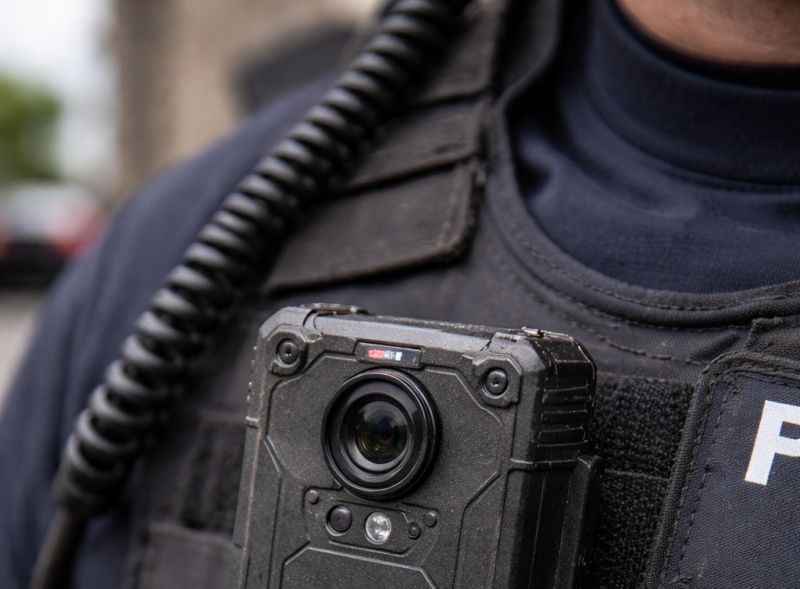
The news from the U.S. sent a clear signal for modern policing: The Department of Homeland Security (DHS/ICE) is rolling out body cameras nationwide. The stated goal behind this multimillion-dollar investment? Maximum transparency and trust in government institutions.
Our Co-founder Sebastian has given this matter a great deal of thought. He raises a crucial technological question: A camera that records is good. But is that even enough in the digital age?
From a technological standpoint, we need to take it a step further. We need to move beyond mere recording - toward irrefutable, mathematical proof.
Existing systems reach a critical limit when it comes to the completeness of recordings. What works today: Metadata and hash values can prove that an existing video file has not been tampered with after the fact.
But where the system fails is that they usually cannot prove whether the recording is complete. If, during a critical incident, several minutes of video footage are suddenly missing, investigators, courts, and the public are left with a mystery: Was it a technical malfunction? Or was the recording intentionally stopped? In moments like these, transparency gives way to mistrust.
To finally close these gaps in the digital age, we must build evidence management on a new foundation. With our TrustNXT approach, we shift the burden of proof away from administrative promises and toward cryptographic guarantees.
“Transparency must not be a political promise—it must become a mathematical guarantee.”, Sebastian Adank.
This upgrade to evidence management ultimately protects everyone: Citizens are protected from potential misconduct or cover-ups. First responders are relieved of unnecessary burden and protected from false accusations when genuine technological failures occur during emergencies. Instead of relying on administrative privileges and trust in individuals, we rely on shared, cryptographic guarantees.
Times are changing rapidly, and trust in digital media is being put to the test worldwide. Our appeal to bodycam manufacturers and law enforcement agencies is therefore this: Let’s think through the logic of modern security technology to its logical conclusion.
Don’t just record. Prove it. Let’s remain critical. Let’s demand real evidence, not mere promises and close the open doors for fraud.