
Why Decentralized Trust Requires Different Network Protocols
tech-insight・4 min
When autonomous systems interact, trust is no longer a matter of centralized servers, but of decentralized verifiability. “Real-time capability” becomes the bottleneck.
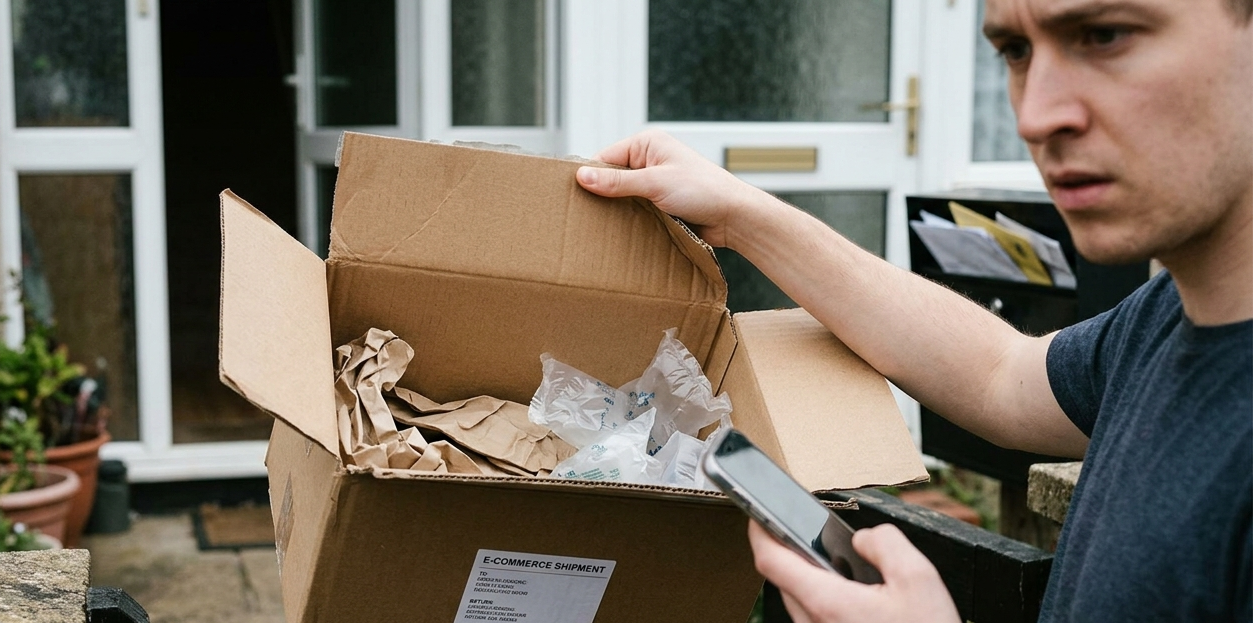
“Hello Support, my package arrived, but it was completely empty. I’d like my money back” - what sounds like a legitimate customer service case is increasingly turning out to be a brazen, systematic scam in e-commerce: friendly fraud.
Thanks to TikTok tutorials and incredibly easy-to-use AI tools on smartphones, Friendly Fraud has become a national pastime by 2026. The scam involving claims of shipping damage or defective products is almost always the same: Customers keep the merchandise (e.g., the expensive smartphone) and back up their claim with a doctored photo of the supposedly empty or torn box.
Retailers are facing a huge problem. Out of fear of bad reviews, refunds are often issued too hastily. Even payment services like PayPal almost always side with the buyer when in doubt. And the logistics provider stubbornly points to the correct scanned weight recorded at the distribution center before shipment.
The result? A massive, costly “blame game” in which the retailer always ends up losing: revenue, merchandise, and profit margin.
Until now, customer service teams have simply asked customers to upload a photo. But in the age of Photoshop and smartphone editing apps, an image file from a gallery is no longer proof of physical reality. It can be manipulated, altered after the fact, or simply copied from the internet.
The solution isn’t to place customers under general suspicion - but to mathematically guarantee the integrity of the evidence directly at the moment it’s captured.
Today, smart software solutions such as closed-loop webcam widgets make it possible to verify whether a damage photo was truly taken live, without filters, and exactly at the delivery location. The result: fraudsters immediately abandon the process (the so-called “drop-off effect”), while honest customers benefit from lightning-fast, automated claims processing.